


Complete Guide to Wastewater Treatment for STP/ETP
Why Your Wastewater Treatment Plant Defines Your Business Legacy
India consumes approximately 1,100 billion cubic meters of water annually, yet treats barely 30% of its wastewater. For every liter discharged untreated, we edge closer to a crisis that threatens not just our environment, but our operational licenses, community reputation, and bottom line.
As a facility manager or plant owner, you already know this reality. The CPCB inspection notices, the complaints from neighboring communities about foul odors, the steadily climbing operational costs, these aren’t abstract problems. They’re daily battles that demand immediate, effective solutions.
The choice isn’t whether to treat wastewater anymore. It’s about how to do it efficiently, affordably, and sustainably in India’s unique operational environment.
Understanding India’s Wastewater Treatment Landscape

The Regulatory Reality
Indian industries and residential complexes operate under strict environmental oversight. The Central Pollution Control Board (CPCB) and State Pollution Control Boards have established non-negotiable discharge standards. Biochemical Oxygen Demand (BOD) levels must stay below 30 mg/L for discharge into inland surface waters, while Chemical Oxygen Demand (COD) limits vary by industry, textile units face stricter norms than food processing facilities.
Non-compliance isn’t just about penalties. The Environmental Protection Act empowers authorities to shut down operations entirely. Several manufacturing units in Gujarat and Maharashtra have faced closure orders in recent years, with restart processes taking months and costing crores in lost production.
Climate-Specific Challenges
India’s tropical and subtropical climate creates unique operational challenges. Monsoon flooding can overwhelm treatment systems, diluting bacterial cultures and disrupting biological processes. Summer temperatures exceeding 40°C accelerate evaporation and alter microbial activity rates. These fluctuations demand treatment systems that adapt rather than fail.
The high organic load in Indian wastewater, from food processing residues to dairy effluents, requires robust biological treatment capabilities. Traditional chemical methods struggle with this variability, leading to inconsistent treatment quality and frequent operational adjustments.
STP vs ETP: Knowing Your Treatment Requirements

Sewage Treatment Plants (STP)
STPs handle domestic wastewater from residential complexes, townships, hotels, and commercial buildings. The influent contains human waste, kitchen discharge, laundry water, and general bathroom effluent. Typical characteristics include:
- Organic Load: BOD ranges from 200-400 mg/L
- Solid Content: Total Suspended Solids (TSS) between 200-350 mg/L
- Pathogen Presence: High bacterial and viral contamination requiring disinfection
Modern residential projects in Bangalore, Pune, and NCR commonly install STPs with capacities ranging from 50 KLD to 500 KLD. The treated water often feeds landscaping systems, cooling towers, or flushing networks, making treatment quality directly impact operational independence.
Effluent Treatment Plants (ETP)
ETPs tackle industrial wastewater with dramatically different characteristics. A textile dyeing unit in Tirupur discharges water with heavy metal traces and complex organic compounds. A pharmaceutical facility in Hyderabad generates effluent with high salt concentrations and residual drug compounds. Each industry presents distinct challenges:
- Chemical Industries: Heavy metals, acids, alkalis, and toxic organic compounds
- Food Processing: Extremely high BOD/COD ratios, oils, and suspended solids
- Textiles: Color, high pH variations, and synthetic chemicals
- Pharmaceuticals: Antibiotics, hormones, and persistent organic pollutants
The treatment approach must match the contaminant profile. Generic solutions fail, leading to regulatory violations and operational crises.
The Bioremediation Revolution in Wastewater Treatment
Beyond Conventional Chemical Treatment
Traditional wastewater treatment relies heavily on chemicals, coagulants, flocculants, disinfectants, and pH adjusters. While effective in the short term, this approach creates dependency, generates secondary pollution through sludge, and escalates operational costs.
Bioremediation harnesses nature’s most efficient decomposers: microorganisms specifically selected and cultivated to break down pollutants. Team One Biotech’s microbial consortia represent years of research into Indian wastewater characteristics, selecting strains that thrive in our climate and effectively metabolize our specific contaminant profiles.
How Microbial Treatment Works
Specialized bacteria colonies consume organic pollutants as their food source. They break down complex molecules, proteins, fats, carbohydrates, and even certain industrial chemicals, into harmless end products: water, carbon dioxide, and biomass. This process happens continuously, creating a self-sustaining treatment ecosystem when properly managed.
The microbial approach addresses problems chemical treatment cannot:
Odor Elimination: Hydrogen sulfide and ammonia gases causing foul smells are biologically oxidized at the source, eliminating odors rather than masking them.
Sludge Reduction: Microbes consume organic matter more completely, reducing sludge generation by up to 40% compared to conventional activated sludge processes.
Operational Stability: Biological systems resist shock loads better than chemical processes, maintaining treatment efficiency during flow or load variations.
Cost Efficiency: After initial bioaugmentation, ongoing microbial treatment costs significantly less than continuous chemical dosing.
The Team One Biotech Difference
Not all microbial products deliver equal results. Team One Biotech’s formulations are specifically engineered for Indian conditions. Our consortia include facultative anaerobes that function effectively whether oxygen is abundant or limited, crucial for plants with inconsistent aeration. We incorporate strains that tolerate high temperatures and pH fluctuations common in industrial effluents.
Most importantly, our solutions come with technical support. Bioremediation isn’t about pouring microbes into a tank and walking away. It requires understanding your specific wastewater characteristics, optimizing environmental conditions, and monitoring microbial health. Our team provides this expertise, transforming bioremediation from a product into a complete Wastewater Treatment solution.
The Three Stages of Effective Wastewater Treatment
Primary Treatment: Physical Separation
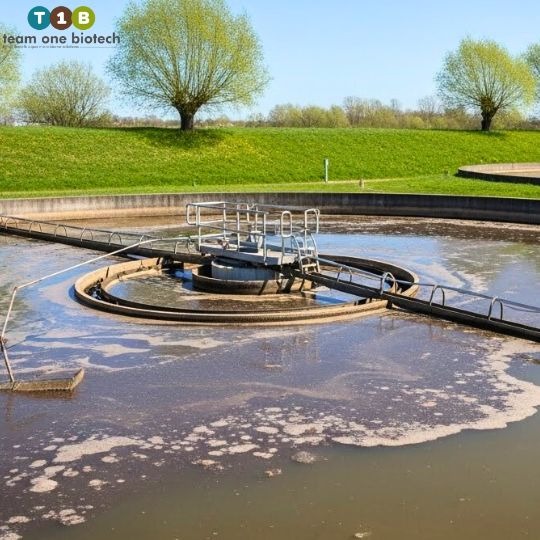
This stage removes large solids and suspended particles through screening, grit removal, and sedimentation. Bar screens catch rags, plastics, and debris. Grit chambers allow sand and heavy particles to settle. Primary clarifiers remove suspended solids through gravity settling.
Critical Factor: Proper primary treatment protects downstream biological processes. Excessive solids loading can overwhelm microbial systems, reducing treatment efficiency.
Secondary Treatment: Biological Breakdown
Here’s where bioremediation truly shines. Aerobic bacteria break down dissolved organic matter in the presence of oxygen. The process occurs in aeration tanks where microorganisms form flocs, clusters of bacteria that settle easily in secondary clarifiers.
Key Parameters to Monitor:
- Dissolved Oxygen (DO): Maintain 2-4 mg/L for optimal aerobic activity
- Mixed Liquor Suspended Solids (MLSS): Indicates bacterial concentration; typically 2,500-4,000 mg/L
- Sludge Volume Index (SVI): Measures settling characteristics; target 80-150 mL/g
- Food-to-Microorganism Ratio (F/M): Balance organic load with bacterial population
Team One Biotech’s microbial consortia optimize these parameters naturally. Our formulations include nitrifying bacteria that convert ammonia to nitrates, addressing nitrogen pollution that causes eutrophication in water bodies.
Tertiary Treatment: Polishing and Disinfection
Final treatment removes residual suspended solids, nutrients, and pathogens. Sand filtration, activated carbon adsorption, and UV disinfection ensure treated water meets discharge standards or reuse requirements.
Advanced Options: Reverse osmosis and ultrafiltration enable water recovery for high-purity applications, though these add capital and operational costs.
Troubleshooting Common STP/ETP Challenges
Persistent Foul Odors
Root Cause: Anaerobic conditions producing hydrogen sulfide and mercaptans. Often results from inadequate aeration or shock loads overwhelming the system.
Bioremediation Solution: Specialized facultative bacteria colonize the system, out-competing sulfur-reducing bacteria. Team One Biotech’s odor control formulations include strains that directly metabolize odor-causing compounds within 48-72 hours of application.
High COD/BOD Levels in Effluent
Root Cause: Insufficient microbial population, poor settling characteristics, or inadequate retention time. Industrial shock loads frequently disrupt biological balance.
Bioremediation Solution: Bioaugmentation with high-concentration bacterial formulations rapidly rebuilds treatment capacity. Our products include multiple bacterial strains that attack different organic compounds simultaneously, ensuring comprehensive treatment.
Excessive Sludge Generation
Root Cause: Incomplete organic matter breakdown or poor sludge settling. Many plants face sludge disposal costs exceeding their chemical treatment budgets.
Bioremediation Solution: Enhanced microbial activity increases organic matter conversion efficiency. Team One Biotech’s formulations include specialized bacteria that degrade complex organic molecules conventional systems leave behind, reducing sludge production while improving effluent quality.
Foaming in Aeration Tanks
Root Cause: Excessive surfactants or filamentous bacterial growth (often Nocardia or Microthrix species).
Bioremediation Solution: Introduction of specific bacterial strains that consume surfactants and out-compete filamentous organisms, restoring normal settling characteristics without chemical anti-foaming agents.
The Economic Case for Bioremediation
Consider a 250 KLD STP serving a residential complex in Pune. Traditional chemical treatment costs approximately Rs. 45,000-60,000 monthly in coagulants, flocculants, and disinfectants. Power consumption for excessive aeration adds another Rs. 35,000-40,000.
Implementing Team One Biotech’s microbial treatment program reduces chemical costs by 60-70% after the initial bioaugmentation period. More efficient biological activity decreases aeration requirements, cutting power consumption by 20-30%. Reduced sludge generation lowers disposal costs by approximately 35-40%.
The total operational savings typically range from Rs. 40,000-65,000 monthly for a mid-sized STP, a 40-50% reduction in operating expenses. The system pays for itself within 3-6 months while delivering superior effluent quality and eliminating odor complaints.
Your Next Steps Toward Treatment Excellence
Effective wastewater treatment isn’t about choosing between compliance and profitability. The right approach delivers both. Bioremediation represents this convergence, environmentally superior, operationally reliable, and economically sensible.
Team One Biotech doesn’t just supply microbial products. We partner with you to understand your specific challenges, design tailored treatment protocols, and provide ongoing technical support. Our solutions have transformed struggling treatment plants across manufacturing, real estate, hospitality, and healthcare sectors throughout India.
Whether you’re commissioning a new STP/ETP, troubleshooting an underperforming plant, or seeking to reduce operational costs, bioremediation offers proven solutions.
Ready to optimize your wastewater treatment plant? Contact Team One Biotech’s technical team today for a comprehensive plant assessment. Let’s transform your treatment challenges into operational advantages.
Call us for expert consultation or visit our website to learn how bioremediation can revolutionize your wastewater management.
Looking to improve your ETP/STP efficiency with the right bioculture?
Talk to our experts at Team One Biotech for customised microbial solutions.
Contact: +91 8855050575
Email: sales@teamonebiotech.com
Visit: www.teamonebiotech.com
Discover More on YouTube – Watch our latest insights & innovations!-
Connect with Us on LinkedIn – Stay updated with expert content & trends!